2026 GRINDING STONE
HIGH-CONSEQUENCE HARD ENDURO

Hello to all my loyal readers. I know it's been a bit since I've posted on here. It's been the busiest year of my life so far and I'm very excited to share it all with you once I slow down.
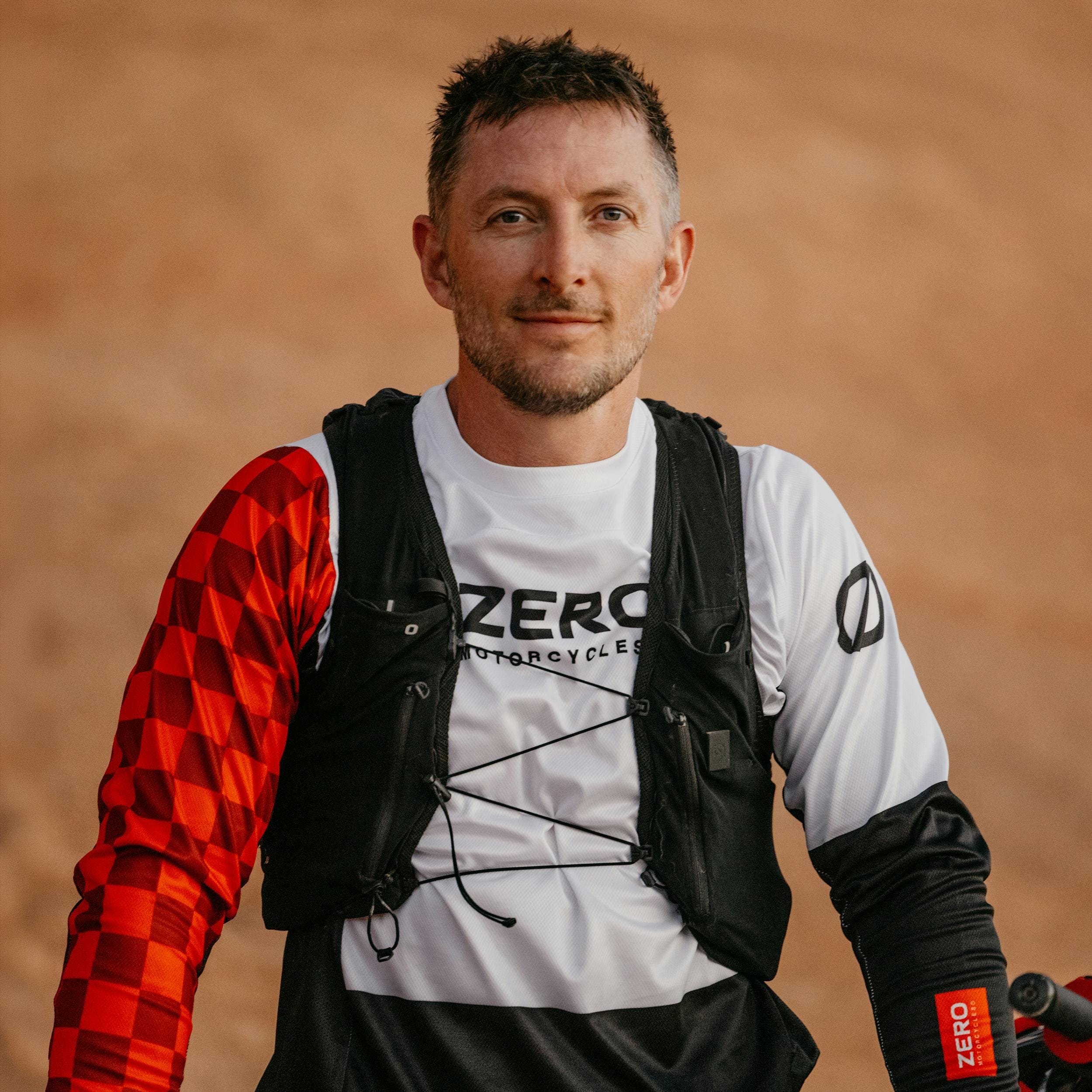
In the meantime, I wanted to share an article I wrote for Zero Motorcycles. A little different than my usual share, but I think you guys will enjoy it, at least you'll enjoy the photos if you don't like dirt biking. You can also watch the YouTube video I made about the race here.
Thank you for all your support. – Isaac.
RACING THE GRINDING STONE HARD ENDURO ON THE ZERO XE
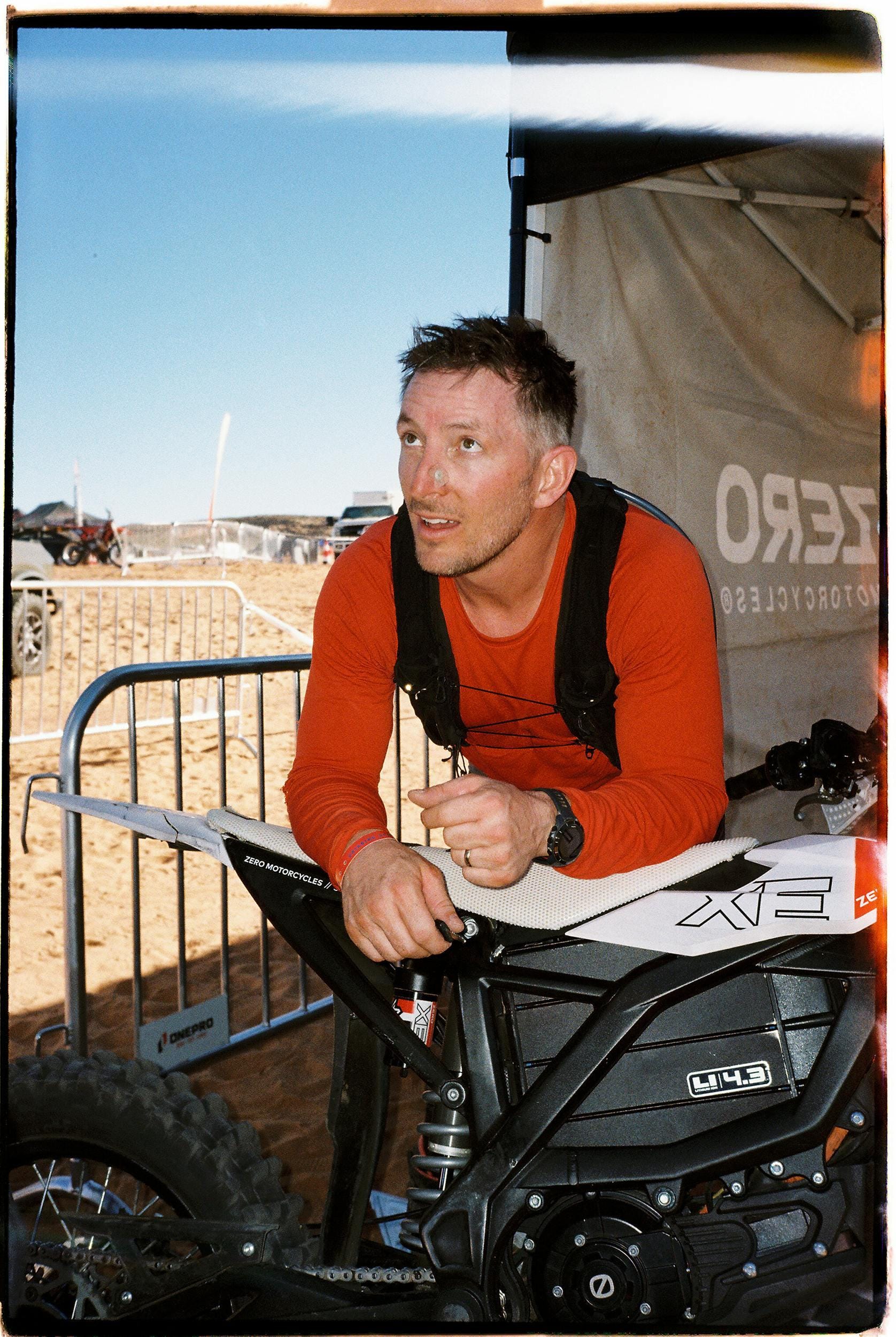
I’ve never met these riders before, but I cruised over to chat with a husband and wife riding two-stroke 300 enduro bikes. I was hoping I’d find a sympathetic ear because I was scared. It was my first time out on the sandstone hills around Page, Arizona, a couple of days before the Grinding Stone Hard Enduro race.
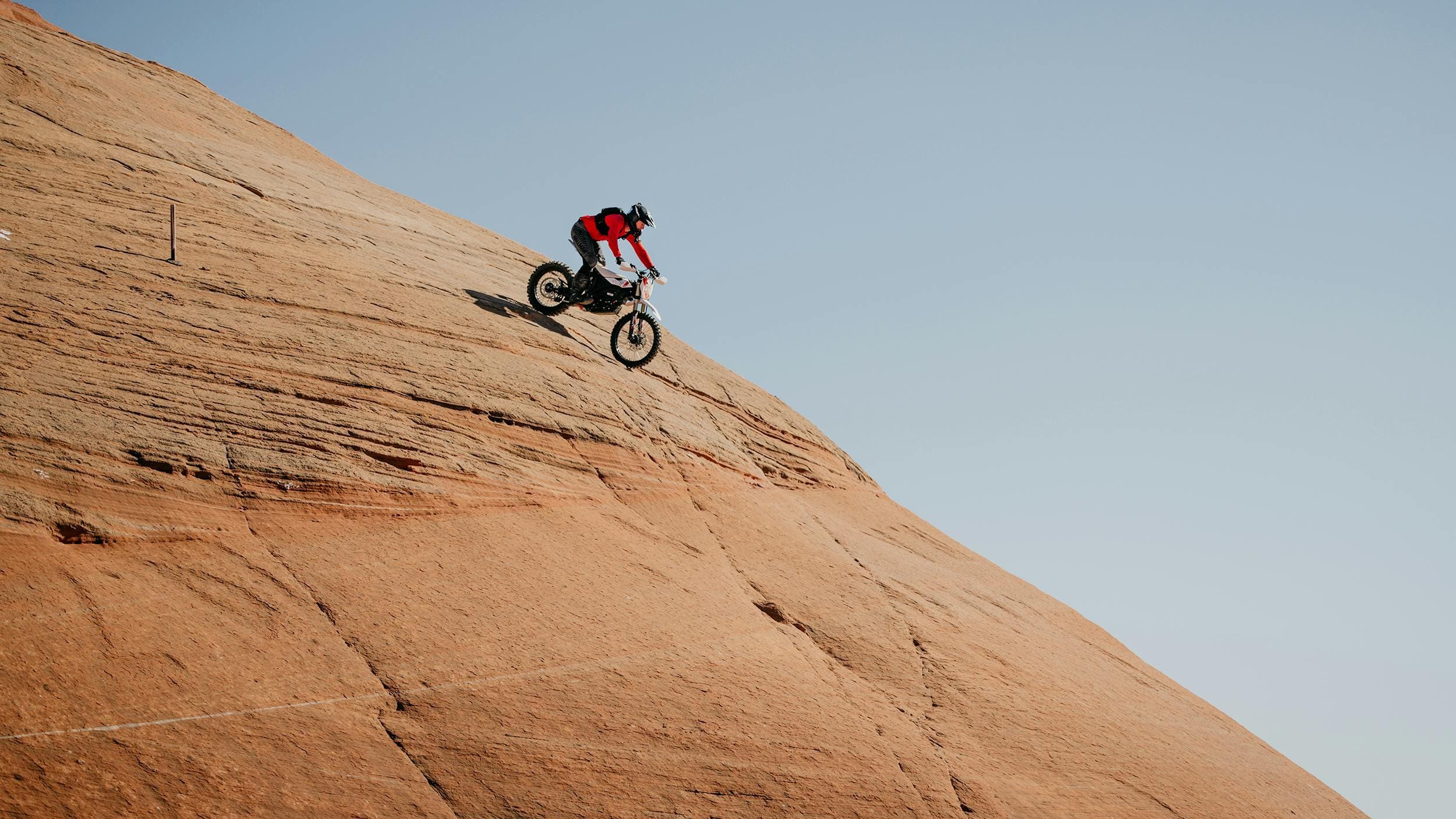
I had agreed, somewhat last minute, to jump on a Zero XE and ride what is widely considered the highest-consequence enduro motorcycle race in the world. This race is terrifying, and even top pros like Trystan Hart and Cody Webb will admit to that. If you mess up a line here, both you and your bike will be tumbling to the bottom of a hill made of rock textured like sandpaper. There is no forgiveness.
“How are you both feeling about the hills?” I tentatively asked the couple. I was really hoping they’d say, “Oh, we don’t ride this stuff, and you won’t see this in the race,” but the woman replied, “They’re really scary, and this is nothing. There are much harder ones in the race.”
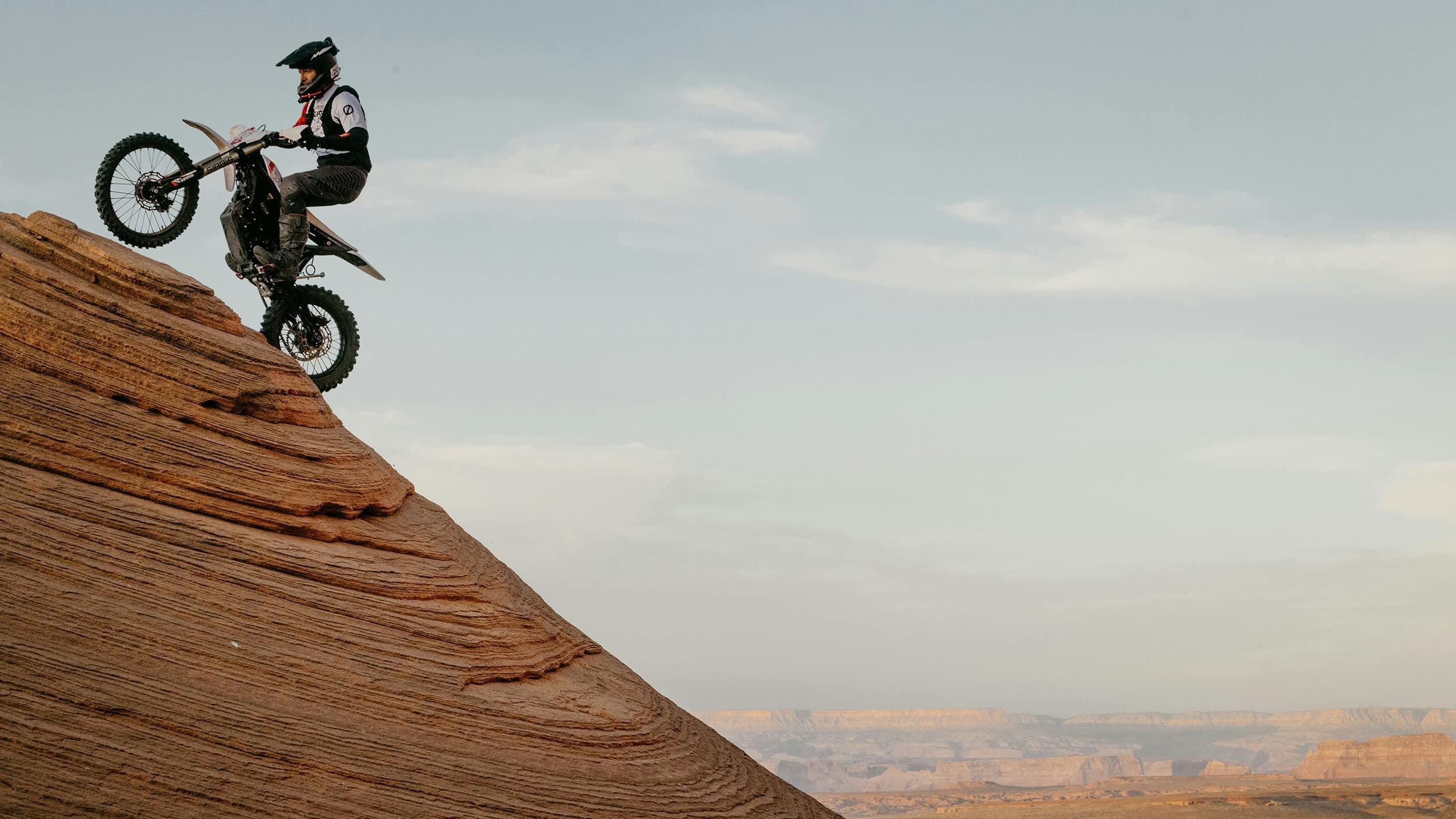
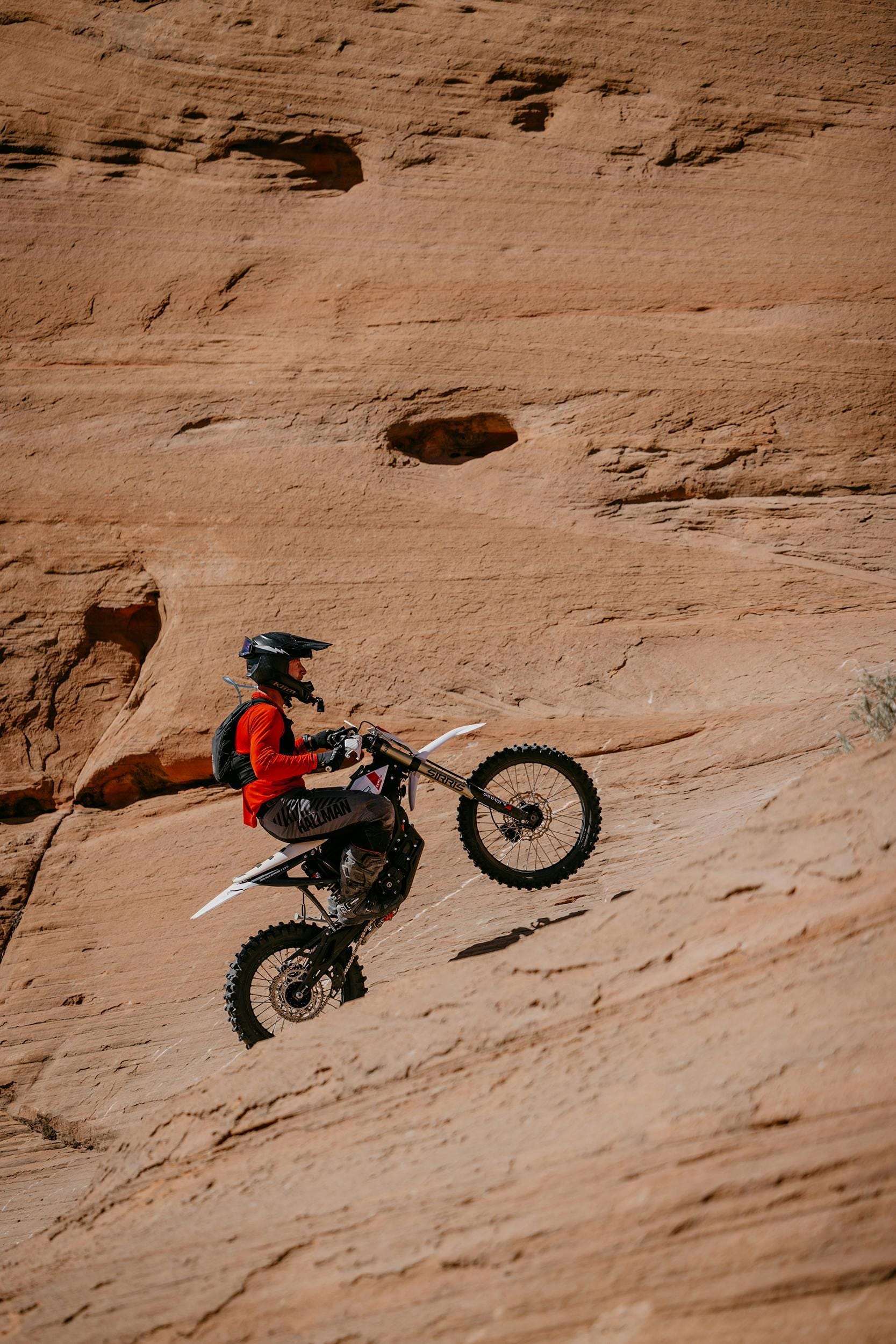
I was not comforted. But staring at the massive hill in front of me, I decided it was safer to send it right now, right here, in front of somebody who could phone emergency services if I didn’t make it. I set the power on the XE to sport mode and pinned it. Halfway up, my front wheel lifted, but I knew I couldn’t let off or I’d never reach the summit. I wheelied for a good 40 feet off the top and was pretty sure I was going to loop out, but I made it over to the sound of encouraging shouts from below. When I got back down, the man said, “I wasn’t sure you were going to make it there for a second.” This was just my first hill of the first day of training. Grinding Stone had many more tricks waiting for me and the XE.
THE XE IS A BIKE THAT MAKES YOU FEEL INSTANTLY COMFORTABLE.
Coming off a gas 300 two-stroke, having no gears and no foot brake or shifter is an adjustment. But after just a few minutes, you get used to the left-hand rear brake and the fact that you never have to shift—you’re always in the right power band. Within half an hour of riding, I was ripping faster turns in the sand than I ever had. But on the big, scary hill climbs, I just wasn’t comfortable yet. With only a couple of hours on the bike, I had my doubts and kept thinking I might have overcommitted by choosing such a burly race for my first real ride on the XE.
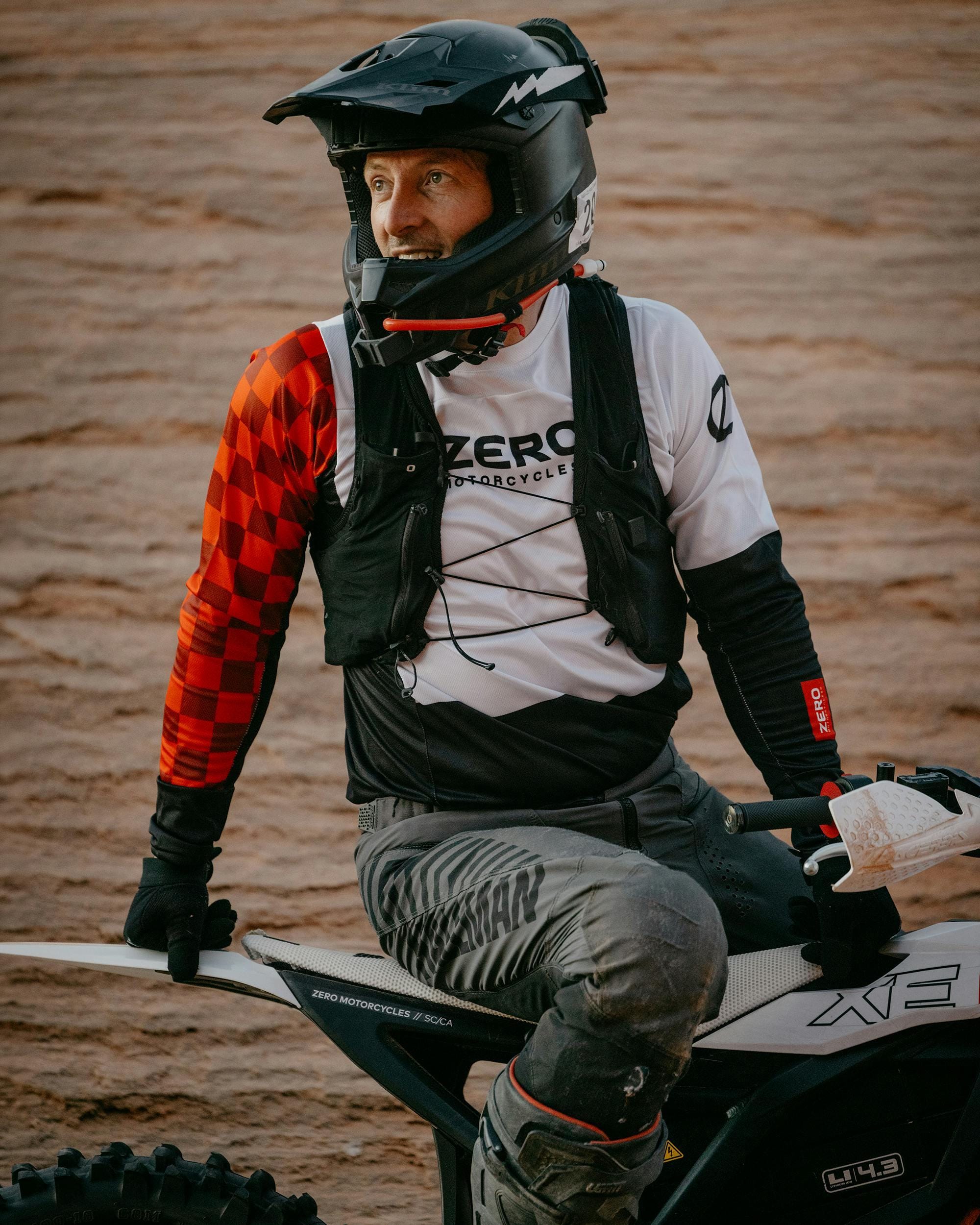
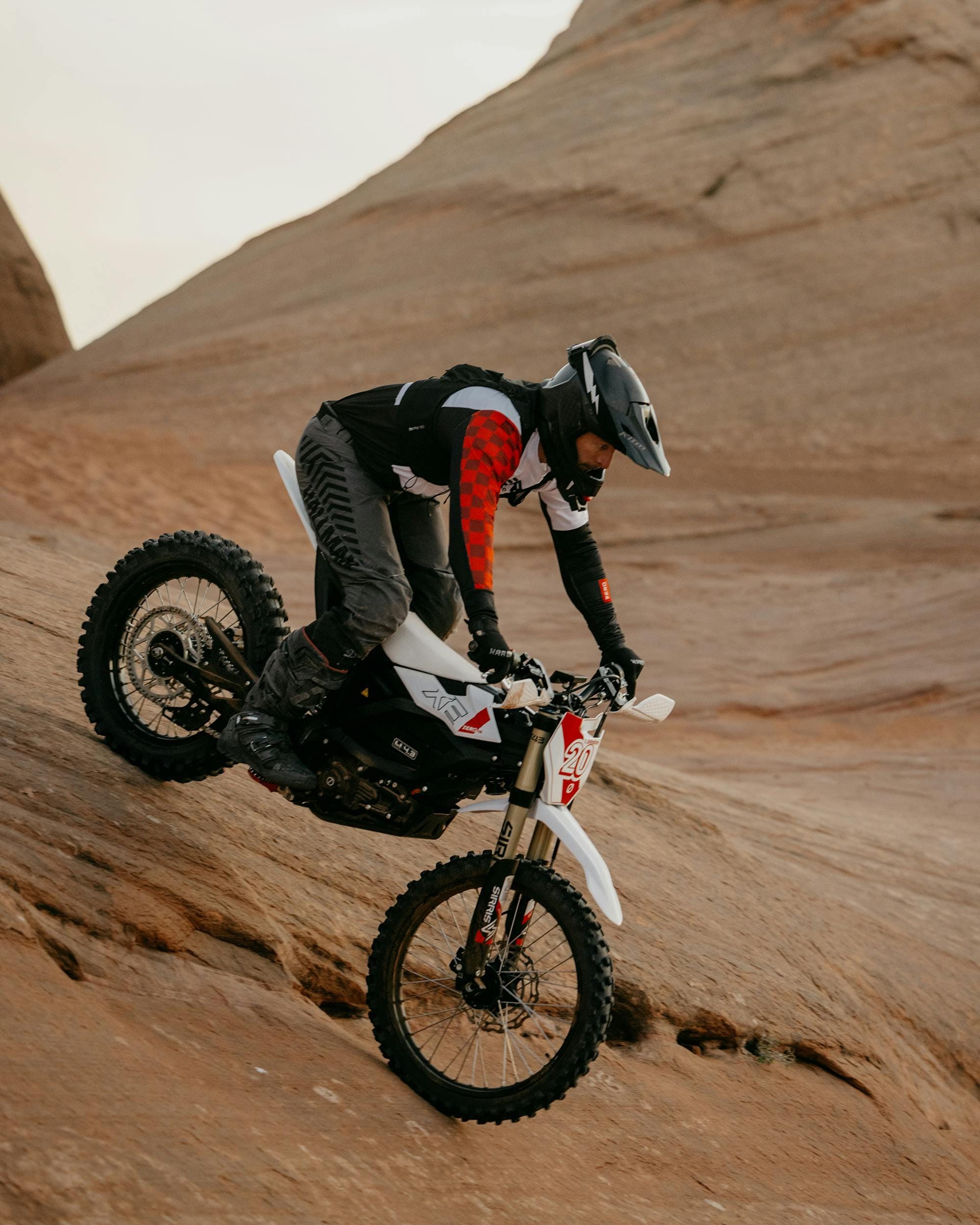
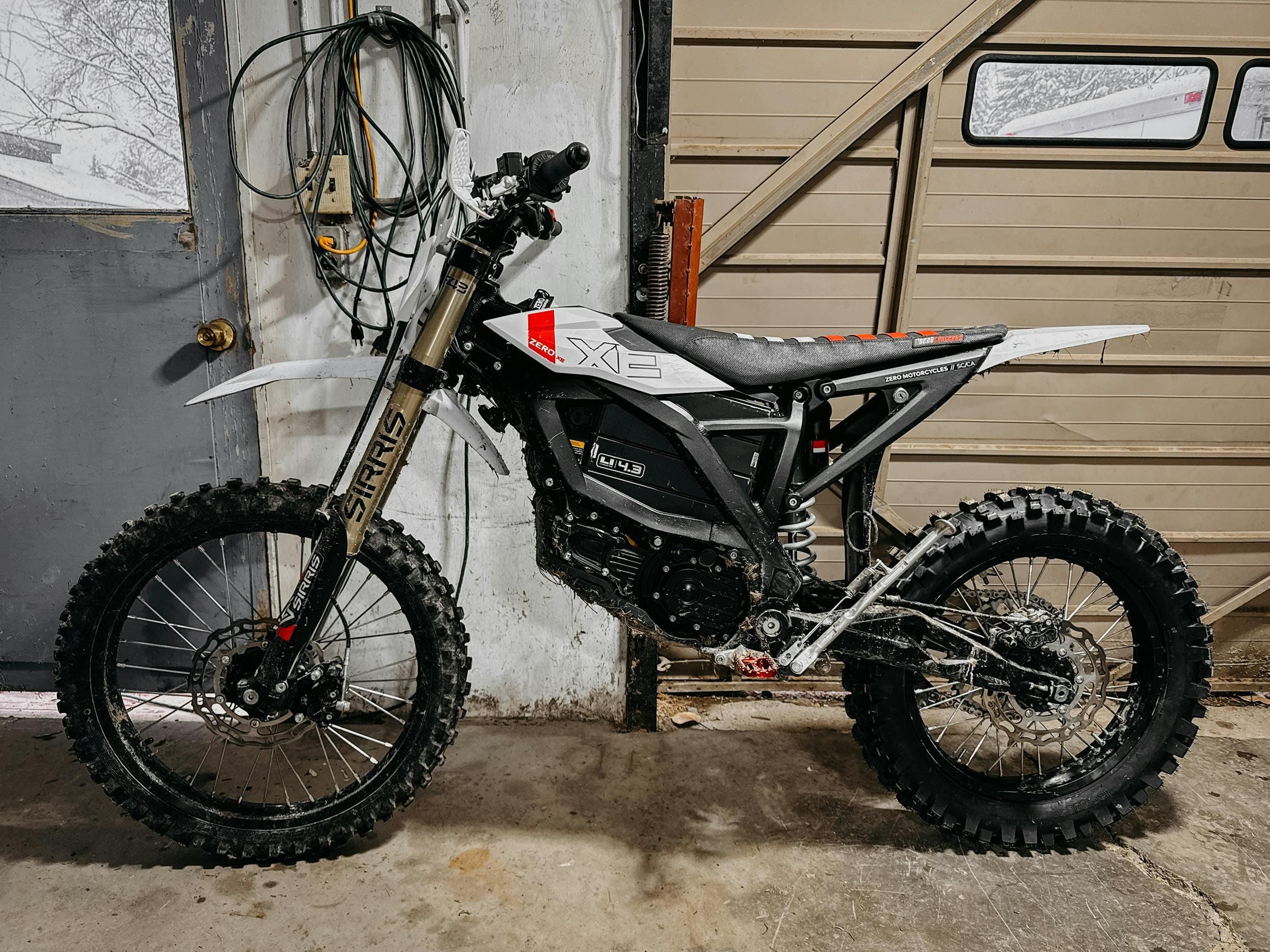
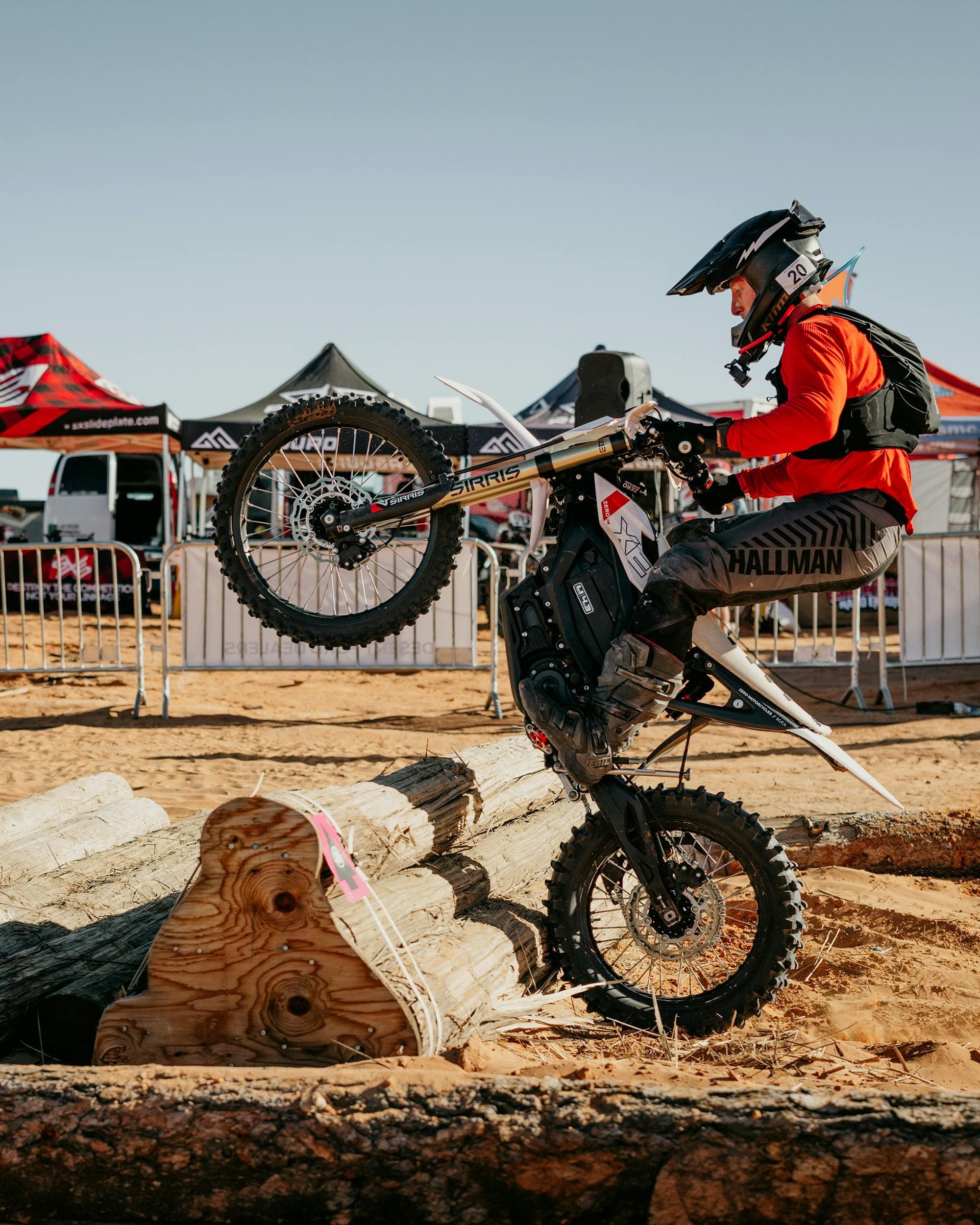
A few weeks earlier, the bike had shown up in a box at my house in Montana during a snowstorm. I quickly got to work making modifications to maximize grip for Grinding Stone’s technical terrain. I added mousse balls in the rear tire and an IRC JX8 gummy tire to ensure traction when sand covered the rocks. I threw on a longer chain to fit that rear tire, moving the chain adjusters all the way back. I stapled on a brand-new #1 Gripper seat cover (honestly, so much better than every other gripper seat cover out there; I’ll never go back), and finally added some red grip donuts to keep my thumb knuckles from blistering.
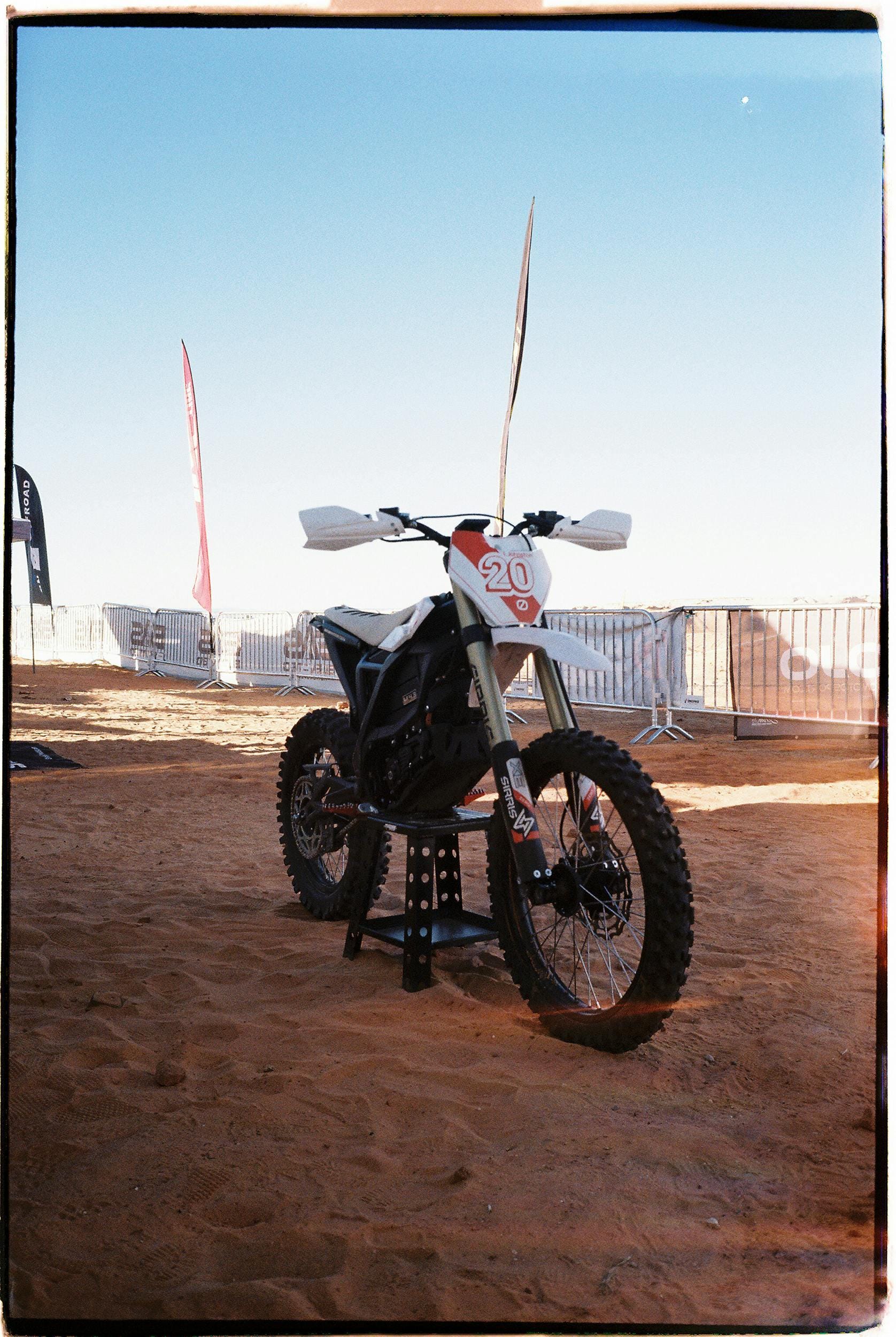
The bike Zero sent came equipped with a prototype Sirris suspension kit front and rear, KKE aluminum pegs, and the headlight removed in favor of a sweet racing plate featuring custom graphics with my name. Honestly, it was already pretty well set up. Any additional tweaks would have to wait; thanks to the snow, I couldn’t really test the bike, and I didn’t have much time before the race anyway.
RACE DAY.
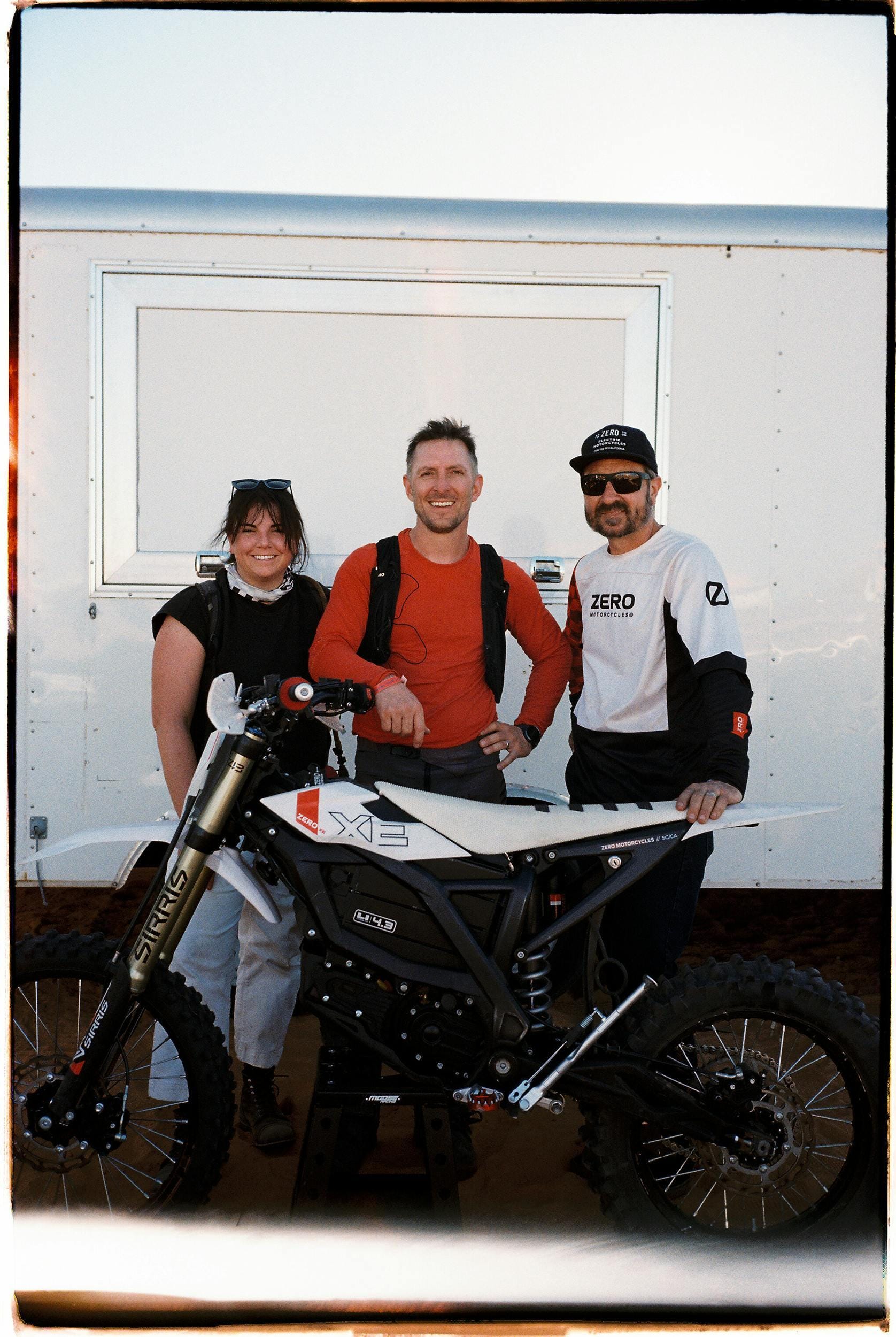
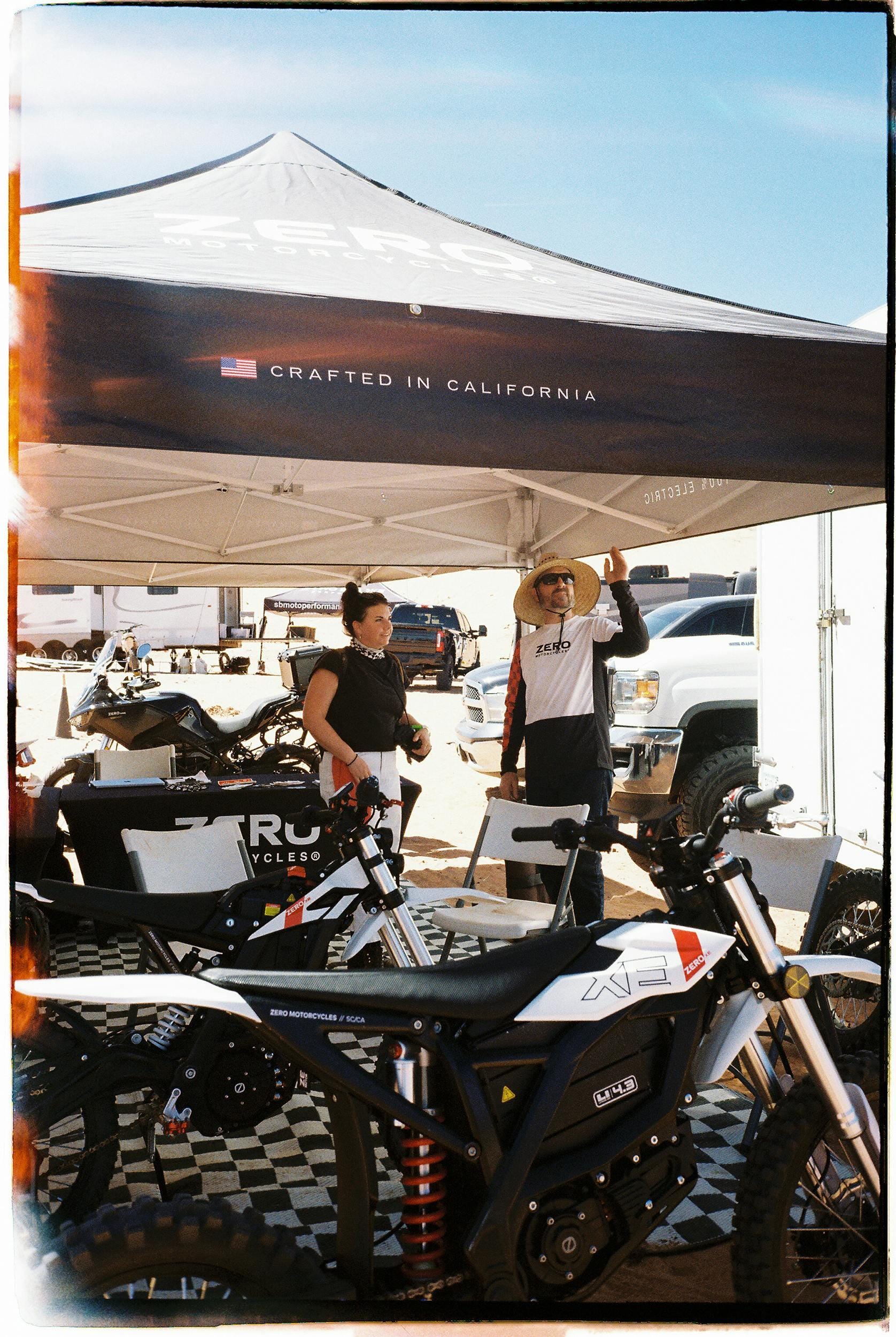
OF COURSE, I DIDN’T GET MUCH SLEEP THE NIGHT BEFORE.
I’d like to say the giant sandstone hills didn’t bother me, but I kept wondering if I was going to make a fool of myself and absolutely wreck the Zero, tossing it down a cliff. That’s not the look you’re going for when you’re making a film for a motorcycle brand. So, even though I had no pressure to race fast, I felt the weight of it.
I started in the very last row with the other media folks. I watched as 288 racers launched row by row in front of me to conquer the track. I tried breathing exercises, warm-ups, stretching, and positive self-talk—really anything to take my mind off the fact that I’d soon be ripping around an unfamiliar course on a bike I barely knew. I really didn’t want to crash.
It turns out the start gate is eerily quiet when you’re in the last row. There are no revving engines waiting for the flag to drop. And since a dead-engine start on an electric bike just means twisting the throttle, I obviously got the holeshot.
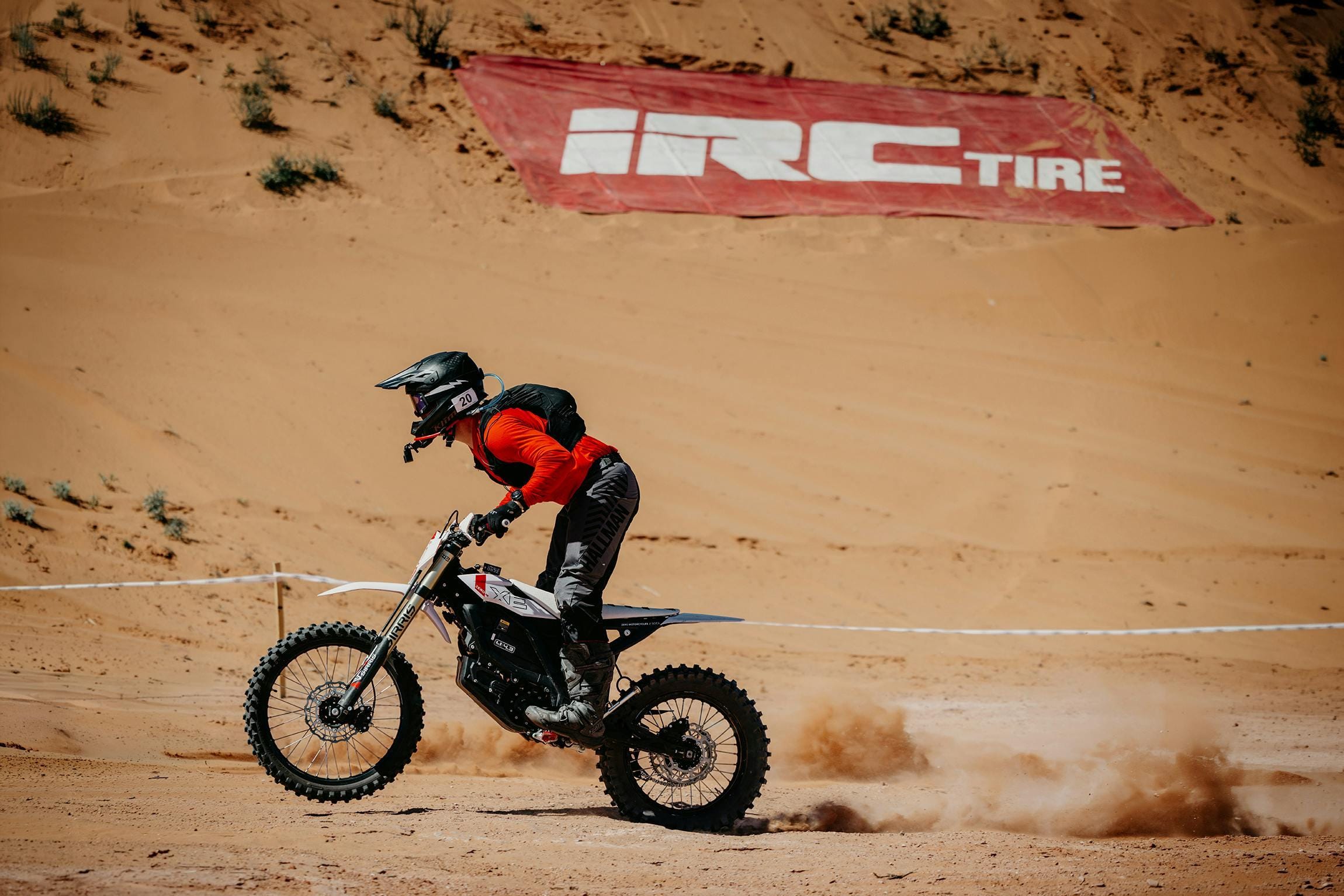
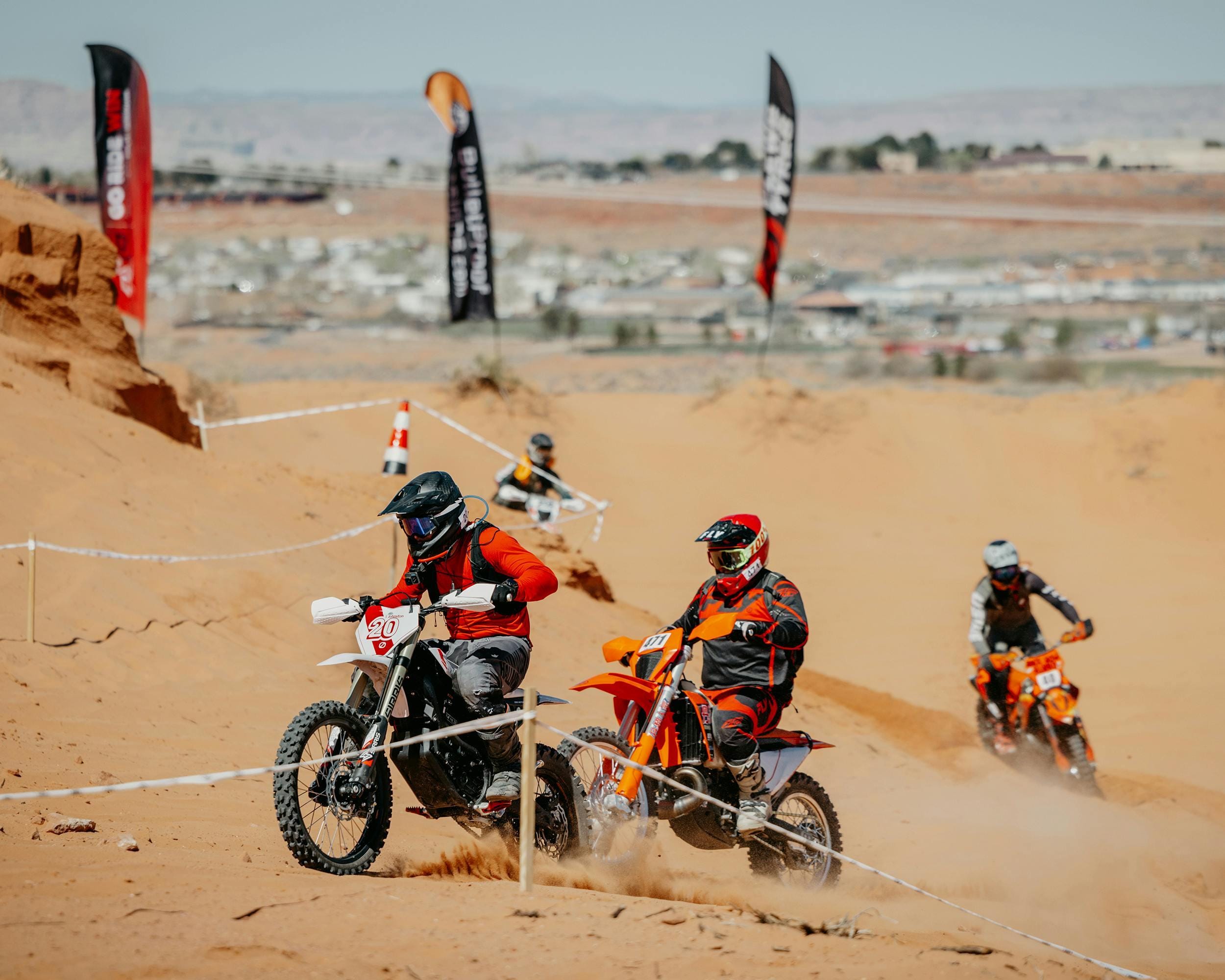
I think only one other guy was even trying for it, so it wasn’t a monumental achievement, but I’ll take it as a victory. I shot out of the gate and launched into my first lap as fast as I could possibly go. Within 30 seconds, I had caught up to the row in front of me, then the row in front of that, passing 20 people. This was fun. If the race kept going like this, it would make a very good video.
Only one problem: It was so hot that after sitting in the sun for over 30 minutes waiting for my turn, my GoPro overheated. I didn’t even know that was a thing. I couldn’t get it to work before we took off, so I have zero footage of that first lap. Not only was the camera overheating, but I was too. Sweat poured into my eyes as I tried my best to keep the bike on two wheels.
In my hurry to get things ready for the race, I hadn’t adjusted the suspension for my weight—I’m coming in at about 230 pounds with all my moto gear and water. I’d later find out the bike was sprung for a 160-pound rider. But right now, I was facing a mile-long straight of thigh-high sand whoops. I was abusing the bike and my body, going as fast as I could through the sand. If I had just slowed down a little, I would’ve saved my energy for the upcoming technical bits. But as an amateur racer, pacing is always a challenge.
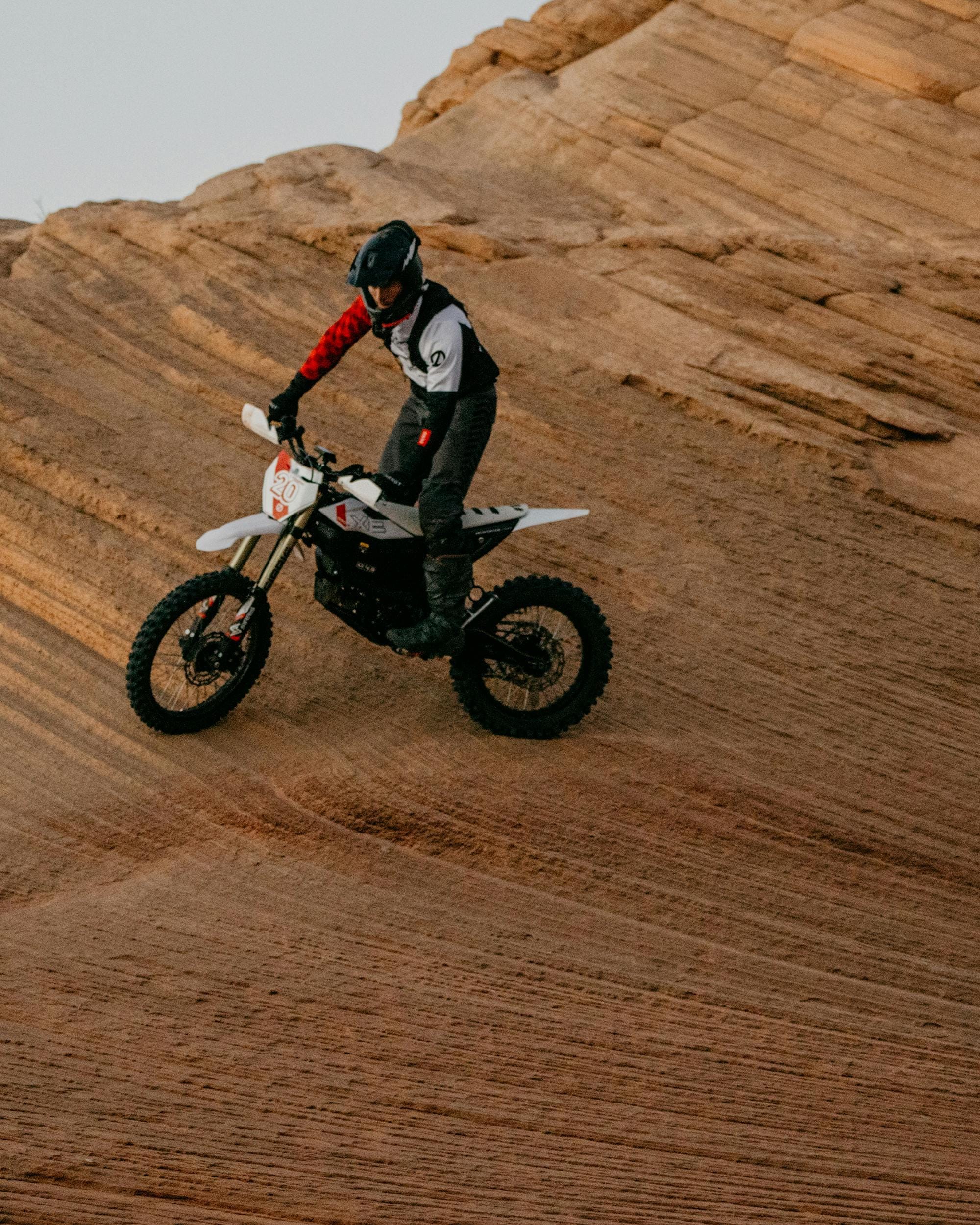
I arrived at the next mesa, and the hills were getting harder. I was making more mistakes but still making the climbs. Finally, after some more mesa action and a desert crossing back to where we started, I arrived at the final big hill before the finish line and the end of Lap 1: Two Step. It starts with a simple ramp out of the sand up onto a near-vertical face, then a mellow section, followed by another vertical face.
Full of confidence, I pinned it through the sand, made it almost to the top, but didn’t quite carry the momentum. I fell backward, watching as my bike cartwheeled down the rock and struck another racer in the side. I felt terrible as he shouted out in pain. I felt even worse when I picked my bike up and saw the handlebars were bent down like a dog ear and the rear fender was shattered. My right peg was bent up, but otherwise, the bike seemed functional. I apologized profusely and checked on the rider. His protective gear had taken the brunt of the hit, and he assured me he’d be fine. I mostly pushed to the top of the hill, and rode the last mile gingerly to the pits. Lap 1: complete.
At this point, I wanted to give up. I had completely worn myself out riding above my ability level at an unsustainable pace. I sat down in a haze, almost forgetting to film my reaction. Tony took the bike, did his best to bend the handlebars back straight, and swapped the battery. I was so exhausted I didn’t even notice when he was finished. After some deep breaths and positive self-talk, I got back on the bike, taking it a little slower this time.
I headed back out, still passing people, but not as many as before. As always happens in hard enduro, I was now sitting down instead of standing and driving the bike. The bike was halfway driving me. My strategy was just to keep moving and hope for a second wind. I was slower in the whoops and slower on the technical sections too. At the end of my second lap, I arrived at Two Step again. This time, I’d learned my lesson. I took the early exit halfway up the hill, which put me in a bottleneck of riders waiting to bypass the technical section. I didn’t care; I was grateful for the break. I knew I could make the hill, but I was happy to swallow my pride, take the easy way out, and avoid tossing my bike into anyone else.
“YOU WERE ABOUT 10 MINUTES FASTER THIS LAP”
...Tony said. I couldn’t believe it. Even though I’d relaxed and ridden with worse form, my time improved. I felt encouraged and knew exactly what I had to do for Lap 3. Tony swapped my battery again, and in under a minute—filming time included—I was back on course.
If I have one skill as a rider, it’s the ability to suffer. It’s why I love hard enduro. The foundation of the sport is whether you can embrace the suffering while executing the nuance required to pilot a motorcycle through nearly unrideable terrain. You aren’t just racing other people; you are racing to conquer the course. It builds a camaraderie unlike any other motorsport I’ve experienced. We all want to test ourselves against the track and see if we can keep going when it stops being fun. Laps 1 and 2 were pure suffering. But now that I knew I was close to being done, I finally caught my second wind. It was all fun.
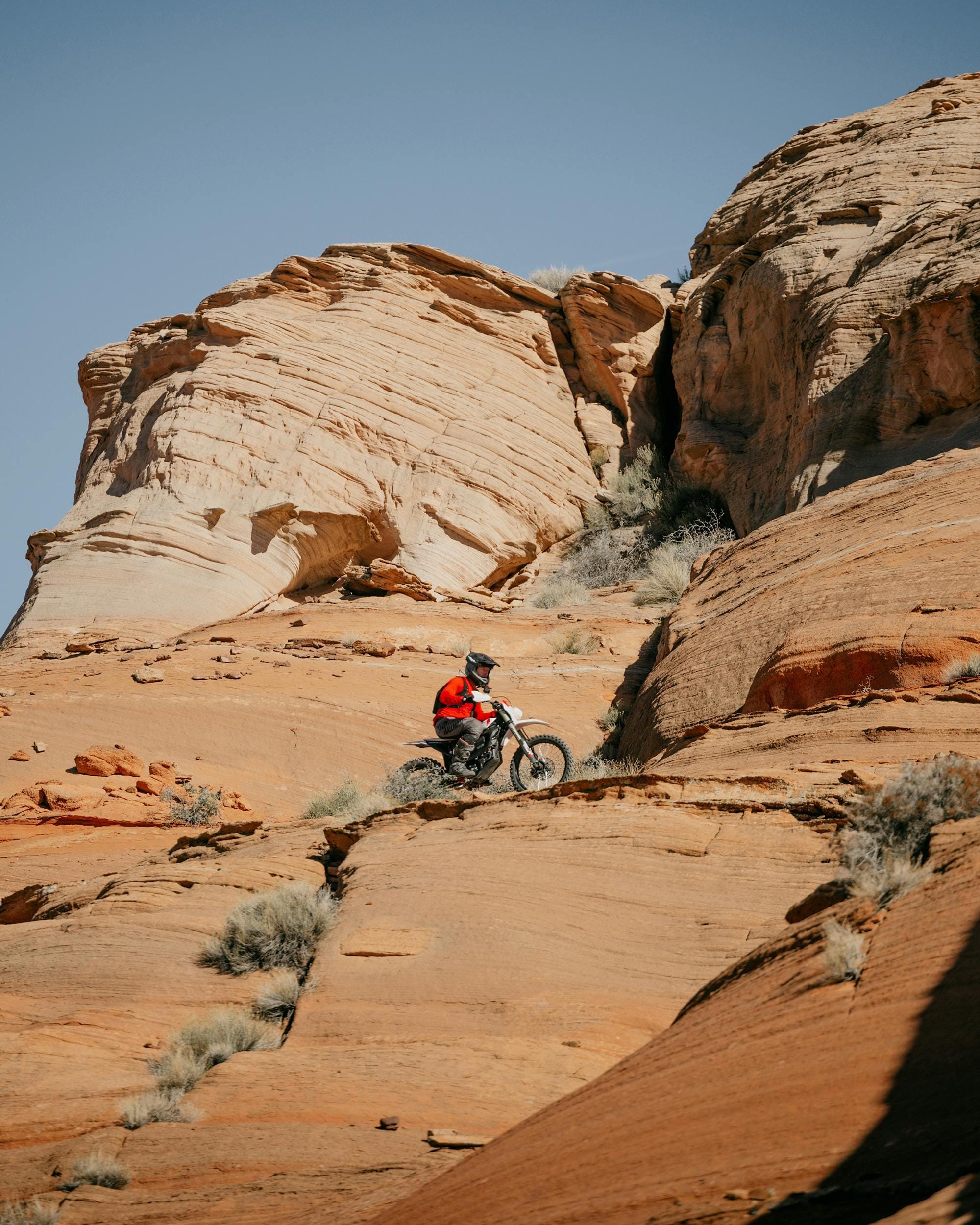
I cruised through Lap 3, enjoying it more than the others. I felt like I knew what I was doing at every obstacle. I knew the lines, what worked, and what didn’t. At Two Step, I took the same early exit, but this time there was barely a line, and I cruised right up.
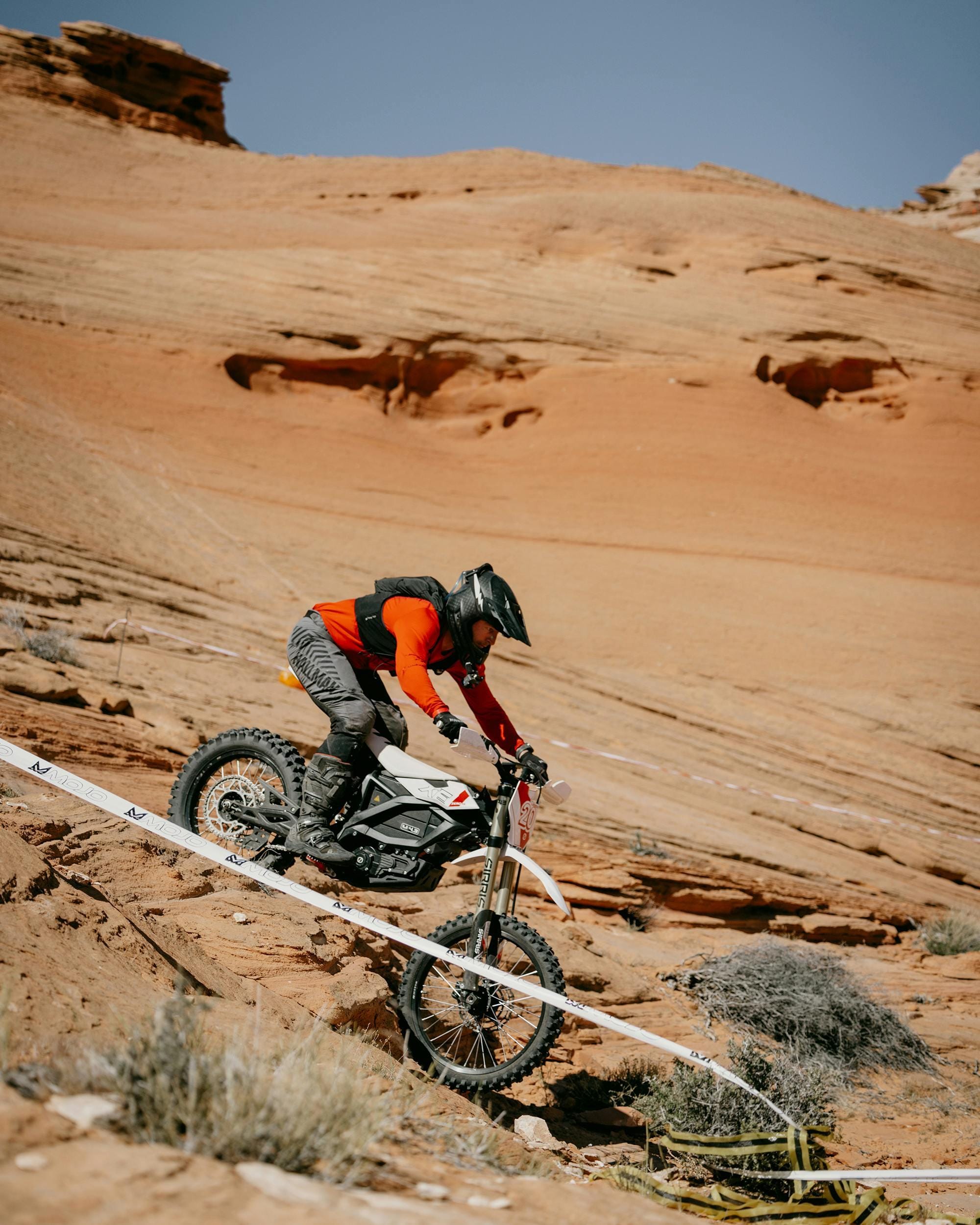
AS I CROSSED THE FINISH LINE,
a part of me wished I could keep going. I felt like I had conquered my fears, and the XE I’d treated so poorly had become a loyal companion. Even after cartwheeling down a hill, running wide-open through deep sand in 95° heat, and smashing into miles of thigh-high whoops, the bike just kept ticking.
The results spoke for themselves. I started 293rd and ended up 122nd overall. The XE and I had passed 171 riders—more than half the field. More importantly, we logged the fastest time of all the electric bikes on the course. Me and a mostly stock XE just kept going.
BATTERY LOGISTICS IN THE DESERT
A big question with electric motos in hard enduro is range. I did three brutal laps, and every lap I was coming back around with about 50% battery left. We wanted to play it safe and avoid running low out on the course, so we swapped batteries every single lap.
Swapping the 50-pound battery takes maybe 30 seconds. You pop the key, pull two clips, yank it out, and place the new one in. Tony had it down to an absolute science. Honestly, swapping batteries was way faster than the time it took me to take a breather, get water, and fix my gear. I was the bottleneck, not the bike.